
Historic Home’s Information and Photos
On this page, you will find history and photos of each of the historic homes with gardens on the 2025 Garden Tour. The information is limited to the recorded known history on each. Click on the addresses below for the full write-up.
The information, photos, and write-up for the historic homes on the 2025 Garden Tour were generously provided by Edmonds Historical Museum and their Curation and Exhibit Design Intern, Erin Grove. Chris Deiner-Karr, of the currently suspended Edmonds Historic Preservation Commission, provided additional information and pictures. We thank them for their hard work and commitment to providing this information for your enjoyment.
The Edmonds Historical Museum will be open on the day of the tour. Please support them by stopping by to see the display of Edmonds in 1906 and other artifacts of Edmonds’ early history.
Nicholson - 1011 2nd Ave S.
This charming home is historically renowned as the Great Northern Railway Section Foreman’s House, a remarkable testament to the region’s rich railroad heritage. Constructed in the year 1917 by the Great Northern Railway, it served as a residence for the railway’s personnel, highlighting its significance as a functional yet inviting dwelling within the railway community. Although it now proudly stands at 1011 2nd Ave S, this distinguished house has a storied past, originally situated east of the railroad tracks—an area that has since transformed into the modern railroad parking lot.
Throughout its history, this house has experienced an impressive three relocations. Its first journey took it across Dayton Street, demonstrating the adaptability and resilience of this architectural gem. The second move transported it to the 200 block of Dayton, showcasing its versatility and the community's enduring commitment to preserving its historic significance. The final relocation occurred in 1978, bringing the home to its current address where it continues to flourish and be cherished by its owners.
In its original setting, the house was graced by Section Foreman Hogart, the first stationmaster to call this dwelling home. His occupancy marks not just the beginning of this house's story but also its important role in the operations of the Great Northern Railway.
Architecturally, the home is a splendid example of the Vernacular style, characteristic of practicality and functional design rooted in local traditions. This style not only reflects the period in which it was built but also resonates with the spirit of the community it served. Presently, the house is owned by Gene and Linda Nicholson, who have lovingly cared for and maintained its historical charm.
One notable accolade awarded to this home is for its stunning garden front, where it was recognized for having the "most beautifully landscaped yard on the Great Northern Line." This distinction not only emphasizes the dedication of the Nicholsons to maintaining the home’s exterior but also showcases the harmonious blend of nature and architecture that defines this lovely property. It's interesting to note that the house was originally located near the Union Oil Docks, a detail that further enriches its historical significance and connection to the area’s industrial past. This home stands not just as a structure, but as a charming narrative woven into the fabric of the community’s history and legacy.
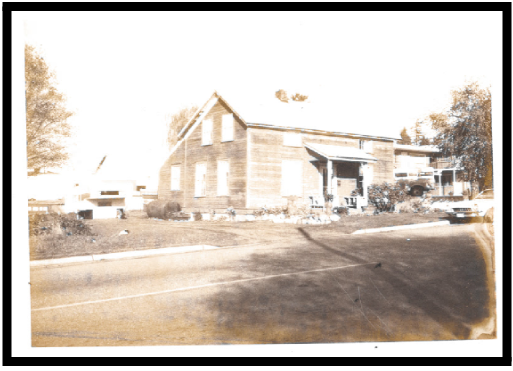
240.79 photo with the caption "Mr. & Mrs. Sam Macchia in front of Great Northern Railroad Station Agent's house, c. 1920s
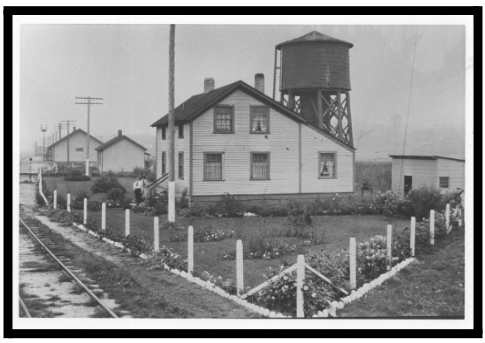
180.197 1011 2nd Ave S from 1977
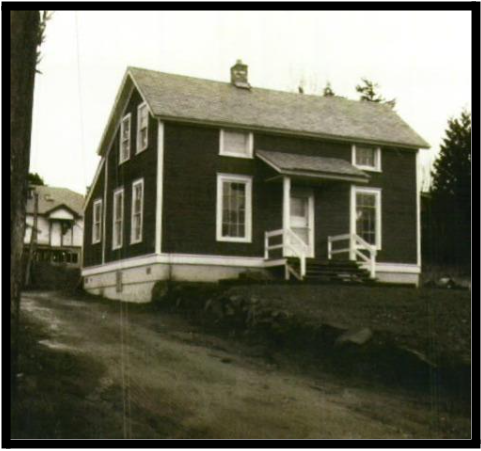
Remodeled-1979
Jacoby - 555 Main Street
Known affectionately as the Bettinger House, this historic residence was constructed in 1907 by William and Ina Bettinger, marking the beginning of a significant chapter in the architectural history of the area. This charming home is unmistakably characterized by a variety of quintessential Queen Anne details that contribute to its timeless appeal. Among its standout features are the multiple gables that grace its façade, a wraparound porch that invites leisurely afternoons spent outdoors, charming fish-scale shingles that add texture and intrigue, and intricately crafted decorative woodwork that reflects the craftsmanship of the era in which it was built.
The legacy of Ina Bettinger extends beyond just her role as a homeowner; she made a profound impact on the community as the very first teacher at a modest, white wood-planked school building. This small institution eventually paved the way for the establishment of the more expansive Alderwood Manor Grade School, a testament to the growth and development of education in the region. The Alderwood Manor Grade School opened its doors to eager students in 1918, embodying the community's commitment to providing a solid educational foundation. However, as the needs of the growing population evolved, the Alderwood Manor Grade School had to adapt to these changes, and by 1921, it was replaced by a newer and more modern facility, signifying a shift in educational infrastructure and priorities.
The Bettinger House stands as a poignant reminder of the rich historical tapestry of the area, encapsulating the story of its original owners while also serving as a monument to pioneering educators like Ina Bettinger, whose contributions have left an indelible mark on the local community. As preservation efforts continue to celebrate homes like this, the Bettinger House not only offers a glimpse into architectural styles of the early 20th century but also serves as a vessel for the memories and achievements of those who once inhabited its walls.
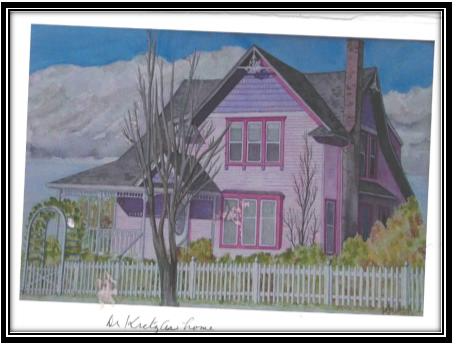
180.235 Painting of the house
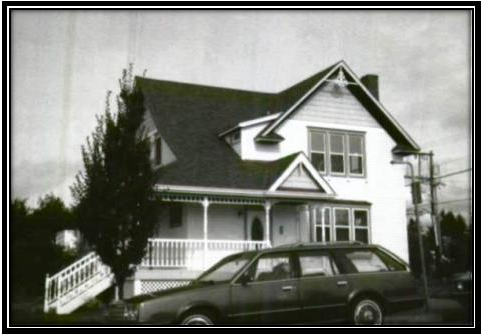
1976
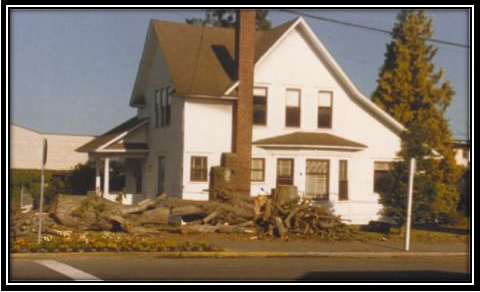
180.70 photo from 1988
Needham - 820 Main Street
Built in 1901, this home is a representative of the early 20th-century American Craftsman movement.
The land was first patented in 1872 by Charles Vickers; it was an investment. He would come to sell the land to those moving to our wonderful city. Such names included: C.L. Lawry, John Darragh, and Thomas H. Knott, who lost the property in tax delinquency all before 1913.
There was still virgin forest in the bowl area, and the old-growth timber was being cut at a feverish pace to feed the shingle mills that lined the waterfront. The home is a reflection of Edmonds early development.
This home became the 23rd property on the Edmonds Register of Historic Places. Properties on the list are associated with the history of Edmonds, retain their original integrity, and are more than 50 years old. A list of these properties is available online from the City of Edmonds website.
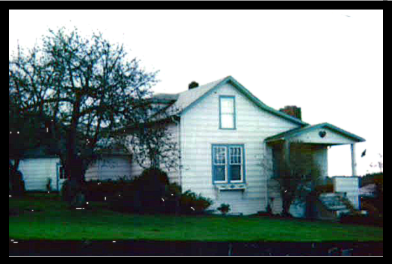
1972
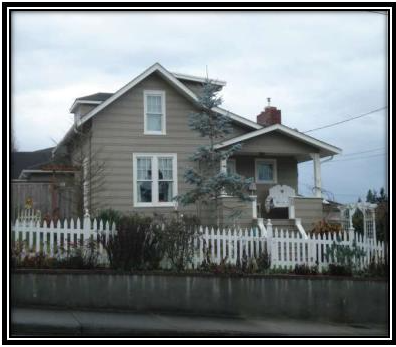
1992
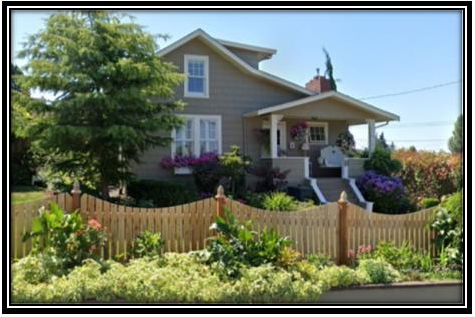
2024
Paust - 825 Main Street
The Profitt/Astell House is a distinguished example of a two-story Craftsman bungalow, constructed in 1901. This historic residence is notable for its association with two prominent figures in the local community: George Profitt and James Astell. Profitt, a significant contributor to the town’s infrastructure, served as the water superintendent and was the plumbing proprietor of Reliable Flooring. Meanwhile, James Astell, the son of Carrie Yost Astell, played a vital role in local governance, serving multiple terms as a city councilman and holding the esteemed position of Fire Chief.
Originally, the house was situated on a knoll, located at the site of the original grade school on Main Street, approximately two blocks west of its current location. In 1928, during a pivotal period of growth in the community, George Profitt purchased the home and oversaw its relocation to its present site. This move occurred around the time of the construction of Edmonds Elementary School, which is now the location of the Francis Anderson Center.
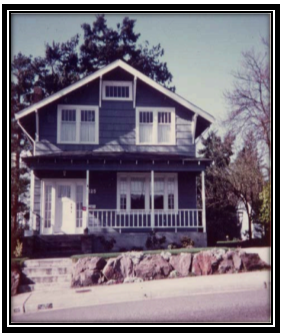
Profitt-Astell-House-mid-1970s
Pauls - 310 Sunset Avenue N
Originally owned by Zachary Taylor Allen and his wife, Minnie Allen, this charming residence was constructed in 1906, standing as a testament to the architectural beauty of the time. Minnie Allen, in particular, earned a beloved reputation within the community for her iconic garden, a vibrant and enchanting space that brought joy to all who beheld it. Her green thumb was so widely recognized that it was immortalized in her obituary published in the Edmonds Tribune Review in 1913, which spoke fondly of her horticultural talents. Many of the flowers that filled her garden were gifts from friends and family who understood her passion for cultivating a visually stunning landscape that would enhance the beauty of her home.
The Allen House is an exemplary representation of the Queen Anne Free Classic style, an architectural genre that emerged as a refined descendant of the elaborate Victorian styles popular during the late 19th century. This style is noted for its subtle grandeur, combining intricate design elements with a more streamlined aesthetic. While the back of the house underwent an expansion in 1929, the façade that faces Sunset Avenue has remained largely unchanged since its original construction in 1906. This preservation of its exterior allows the home to retain its historical integrity and charm, captivating onlookers with its enduring beauty.
The Allen family held ownership of the house for many years, passing the property down through generations. The continuity of family presence adds to the home’s historical significance, embedding it deeply within the community’s narrative. John and Shirley Pauls, the current stewards of this remarkable residence, have made it their home for five decades. Initially, the Pauls rented the property for a few years, nurturing a connection to the house that would ultimately lead them to purchase it from the granddaughter of Zachary Taylor Allen himself. Their long-term commitment to maintaining the home and honoring its rich history showcases the deep appreciation for the legacy of the Allen family and the timeless beauty of the home they cherish.
Some info sourced from:
https://etr.stparchive.com/Archive/ETR/ETR08151913P04.php
https://patch.com/washington/edmonds/allen-house
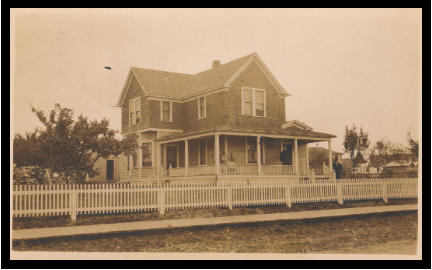
180.566 Postcard photograph of Z.T. Allen residence at 310 Sunset Ave, ca. 1907
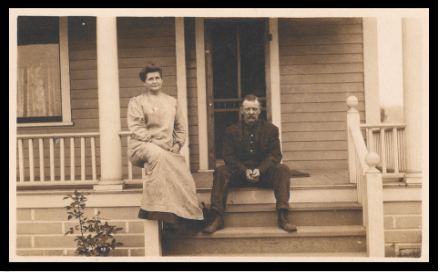
200A-22 Zachary Taylor Allen and Minnie Allen on their front porch at 310 Sunset Ave N., c. 1907
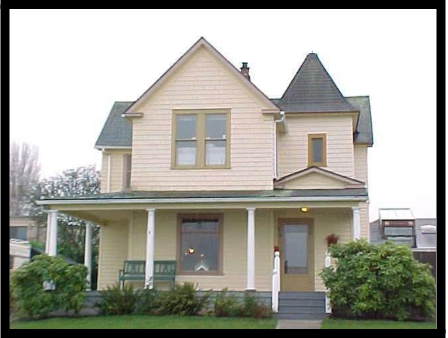
2020
Ely - 320 Sunset Avenue N
Built in 1912 in Queen Anne Style by Harry Van Vleet Allen, born in Michigan in 1878, came to Edmonds in 1906 with his parents, Zachary and Minnie, and brother, Charles. In 1912, he built their family home, a Queen Anne Style on Front Street (Sunset) right next door to his parents. The Allen family remained in this home even after his death in 1948.
Another influential person from Edmonds owned this home: 1971, Edmonds Mayor Harve Harrison lived here. He served 16 years as mayor of Edmonds between 1967 and 1983, the longest consecutive time anyone has held that office. The only Edmonds mayor who occupied the position longer was Fred Fourtner. who was mayor for 17 years total, but was defeated in 1933 after five years in office, only to be re-elected in 1937.
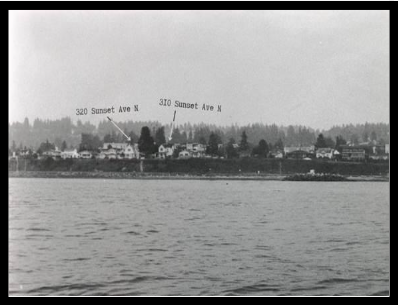
134.86 Sunset Ave & residences, 1976
134.22 non-dated photo of the street from the water; house in question might be visible.
152.27 Aerial photograph of Edmonds waterfront, April 11, 1997
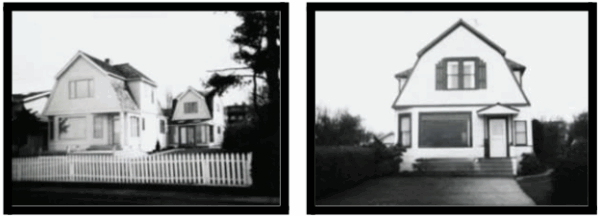
1991
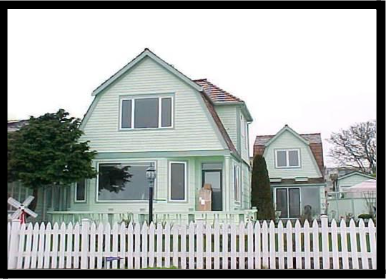
2000
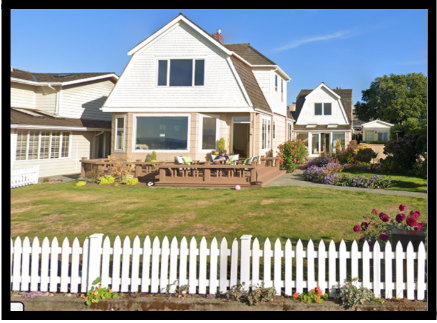
Current
Austin - 729 Main Street
The Bassett House is a historic residence with a rich narrative that dates back to its construction by the Edmonds Logging Company in 1888. It is the oldest standing house in Edmonds.
In 1914, the house was purchased by Frank H. Bassett and his wife, Anna Bassett, originally Anna Vetter. Frank and Anna’s journey began in 1891 when they met and married in Osaka, Japan, when they were both 31 years old.
Frank Bassett was a dedicated local preacher and missionary during their time in Japan, while Anna showcased her talents as a piano teacher, utilizing one of the home’s rooms as a music studio. Their commitment to education and community service played a pivotal role in the establishment of the Edmonds Public Library. Frank was instrumental in building the library, while Anna took on the crucial task of cataloging the books, ensuring that the community had access to valuable literary resources.
Anna Bassett was a dynamic figure in the community, taking charge of several initiatives that enriched the cultural fabric of the area. She founded the Edmonds Music and Art Study Club and was a prominent leader in the Snohomish County Equal Suffrage Club, advocating for women’s rights and equality. In addition, she established the Floretum Garden Club, which aligned perfectly with her passion for gardening and contributed to the beauty of the local landscape.
The Bassett House stands as a testament to the contributions of Frank and Anna Bassett, reflecting their dedication to education, the arts, and community advocacy. Three generations of the Bassett family owned the house till 1983. Today, it continues to be a cherished landmark, celebrating the legacy of those who shaped Edmonds' history.
Info sourced from: https://myedmondsnews.com/2024/11/in-days-gone-by-the-beginnings-of-the-edmonds-public-library/
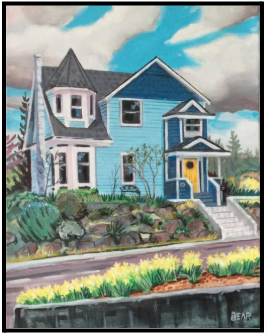
Painting of 729 Main St. by Bear Carpenter
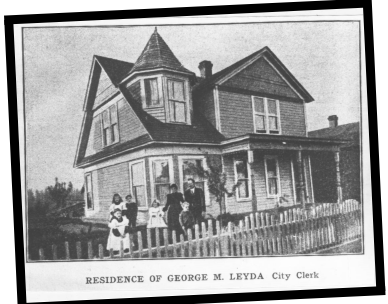
1905 Residence of George M. Leyda - City Clerk
180.81 F.H. Bassett/ George Leyda residence at 729 Main Street, c. 1905
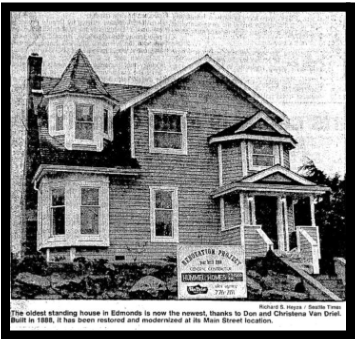
1983 Renovation Project done by the Van Driels.
Bernatek - 731 Main Street
This house was built in 1901 for the saw mill workers and their families. The home, an American Foursquare Colonial, was completed in 1910. Main Street was the main logging road for horses to drag logs down to the saw mills. The land was originally owned by Robert Martindale and was sold to Ira Cobe, who in turn sold it the same day to Samuel Fourtner. Bill and Vinni Crow, the owners of the Edmonds Crow Hardware store, purchased the house from a Lenney Hall in 1931.
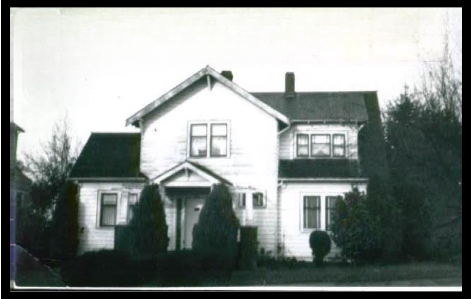
Year unknown
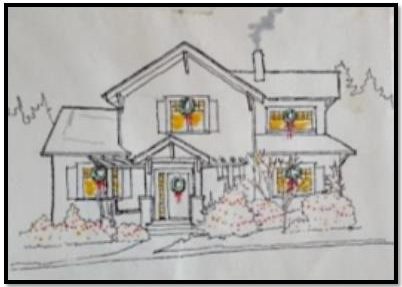
Unknown Artist
The daughter of Bill and Vinni Crow, provided this poem in a book passed on to the Bernatek’s. A lovely thought for all old homes
The House
Who slept here before I came,
Who lived in this room,
How did it look,
Was it the same?
Was there a girl
or two,
a little boy,
A house filled with toys,
with joys,
with dreams…
Or was it just
a lonely place
with empty beds
and silent rooms,
was it filled with gloom,
and did the house long
to be loved.
Was there a girl
who danced and sang,
A dinner bell
that chimed or rang,
And did anyone
ever
stand
right here
as I do now?
Do I know the name,
have I seen the face…
Was this always
the same sweet place,
Was someone glad,
Was someone sad,
Was there a dog,
a cat,
a mouse,
Who has been here,
who knows this house?
Did they know me,
do I know them,
and did they sing a requiem,
I feel them here,
I know their tears,
I loved them too,
The house was new,
was there,
and yet it is the same again,
and was,
and will,
and must always be,
and now
the house belongs to me