
2025 Edmonds Garden Tour
The 2025 Edmonds in Bloom Garden Tour was an unforgettable journey through the past as attendees wandered through the colorful gardens of some of Edmonds historic homes. These Gardens have continued to experience transformation, each with a unique style that mirrors the creativity and energies of their owners.
Participants experienced the echoes of days gone by in the gardenscape of a charming saltbox that served as a train master's home. The grounds of two gracious seaside Queen Anne homes were toured with their exuberant flowers and trees. Also seen were the gardens of Main Street Craftsman and Queen Anne houses, with their lush front yards, vegetable gardens, and intimate spaces for entertaining.The day was filled with imagination and inspiration for any gardener, from the beginner to the seasoned.
The Historical Museum was open along the Garden Tour pathway, along with the old church garden with some period characters at North Sound Church.
Artists
Link- Photos of Artists and Their Art
|
Garden |
Artist | Phone | Website | |
| Jacoby | Ann Robertson | (425) 236-3969 | anninchina@icloud.com | None |
| Needham | Janet Hawse | (206) 556-5828 | jrhawse@gmail.com | https://www.jrhstudio.com |
| Bernatek | Tamara Lee | (206) 361-2626 | 2btamaralee@gmail.com | https://tamaraleestudio.com |
| Paust | Joyce Donaldson | (425) 771-7050 | imcre8iv@frontier.com | https://www.facebook.com/joycedonaldsonstudio |
| Nicholson | Misa Steinmetz | (425) 892-4482 | misa.steinmetz@gmail.com | https://misasteinart.com |
| Pauls | Cheryl Hufnagel | (206) 227-2254 | cherylpastelart@juno.com | https://www.cherylahufnagel.com |
| Ely | Krister Eide | (425) 628-8712 | kristereide@gmail.com | https://kristereideart.com |
| Austin | Jill Owen | 206-499-7173 | athomewithjill6@gmail.com |
Musicians
Link- Photos and Videos of Musicians
| Garden | Musicians | Phone | Website | |
| Austin/Bernatek | Ashley Webster | (206) 890-3240 | kws4561@aol.com | www.thejazzpearls.com |
| Jacoby | Scott Lindenmuth | (425) 776-6362 | scottlindenmuth.com | |
| Needham | Carolyn LaNasa, Marilyn Swanson, Tala Hilis | (206) 291-5009 | clanasa@AOL.com | |
| Nicholson | Lyle Ronglien | (206) 226-2253 | https://www.lyleronglien.com/about.html | |
| Pauls/Eli | David Little | (425) 478-1581 | datmlitt@verizon.net | |
| Paust | Luis Nenninger, Tania Halladay | (518) 260- 3175 | nenn7726@gmail.com | |
| Student Musicians Caroline Bernatek (Alto Sax and Flute) Evan Bortz (Tenor Sax), Sophie Ionitsa (Keyboard), Josh Gifford (Guitar), Max Fenwick (Drums), and Joe Badier (Bass). |
||||
| 4EachOther Band |
The Nicholson Garden
1011 2nd Avenue South
Linda and Gene Nicholson Interview
Photo Album See the Garden Walk-Through from Thor's perspective Here
Artist- Misa Steinmetz
Musician- Lyle Ronglien
Perched atop a grassy slope is one of the most-moved homes in Edmonds, lovingly tended by Gene and Linda Nicholson.
This simple saltbox started its journey at the Union Oil Docks, south of town. Moved to downtown Edmonds, it became the Great Northern Railroad’s Station Master’s home, sitting feet from the tracks. Heralded by Great Northern as “the most beautifully landscaped yard on the Great Northern Line,” the home was relocated to Dayton, west of 3rd Street S., and ultimately to where it sits now.
The Nicholson’s home and gardens are filled with mementos of the past, starting as you enter the property, with an original railroad crossing sign that guards a Little Free Library. “I like things that had a purpose, “comments Linda, “I love to look up at the things someone has given me and then I hang them up and then it's a memory of that person.”
It’s that love of purposeful things, combined with old-fashioned flowers that make the Nicholson’s garden so special. Zinnias grown from seed accent the fence line, million bells tumble out of window boxes and hollyhocks and hydrangeas add texture.
In the backyard, lights illuminate the garden, loaded with hardy fuchsia, dahlias, calla lilies and rose of Sharon. Lovers of birds, Linda and Gene have an eclectic collection of birdhouses where a succession of bird families raise their young every year. And under their watchful eyes, Linda cultivates the gardenscape.
“You know, to me it just literally is happiness. That's what it means to me. I want to make other people happy and myself happy.”
And when you close your eyes – you can almost hear the distant echo of a train whistle…
History
This charming home is historically renowned as the Great Northern Railway Section Foreman’s House, a remarkable testament to the region’s rich railroad heritage. Constructed in the year 1917 by the Great Northern Railway, it served as a residence for the railway’s personnel, highlighting its significance as a functional yet inviting dwelling within the railway community. Although it now proudly stands at 1011 2nd Ave S, this distinguished house has a storied past, originally situated east of the railroad tracks—an area that has since transformed into the modern railroad parking lot.
Throughout its history, this house has experienced an impressive three relocations. Its first journey took it across Dayton Street, demonstrating the adaptability and resilience of this architectural gem. The second move transported it to the 200 block of Dayton, showcasing its versatility and the community's enduring commitment to preserving its historic significance. The final relocation occurred in 1978, bringing the home to its current address where it continues to flourish and be cherished by its owners.
In its original setting, the house was graced by Section Foreman Hogart, the first stationmaster to call this dwelling home. His occupancy marks not just the beginning of this house's story but also its important role in the operations of the Great Northern Railway.
Architecturally, the home is a splendid example of the Vernacular style, characteristic of practicality and functional design rooted in local traditions. This style not only reflects the period in which it was built but also resonates with the spirit of the community it served. Presently, the house is owned by Gene and Linda Nicholson, who have lovingly cared for and maintained its historical charm.
One notable accolade awarded to this home is for its stunning garden front, where it was recognized for having the "most beautifully landscaped yard on the Great Northern Line." This distinction not only emphasizes the dedication of the Nicholsons to maintaining the home’s exterior but also showcases the harmonious blend of nature and architecture that defines this lovely property. It's interesting to note that the house was originally located near the Union Oil Docks, a detail that further enriches its historical significance and connection to the area’s industrial past. This home stands not just as a structure, but as a charming narrative woven into the fabric of the community’s history and legacy.
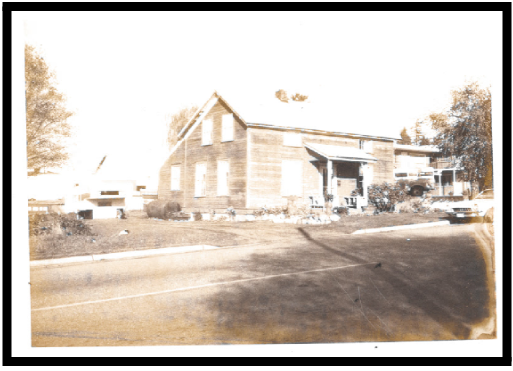
240.79 photo with the caption "Mr. & Mrs. Sam Macchia in front of Great Northern Railroad Station Agent's house, c. 1920s
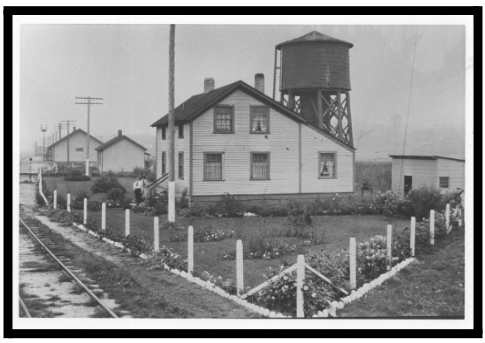
180.197 1011 2nd Ave S from 1977
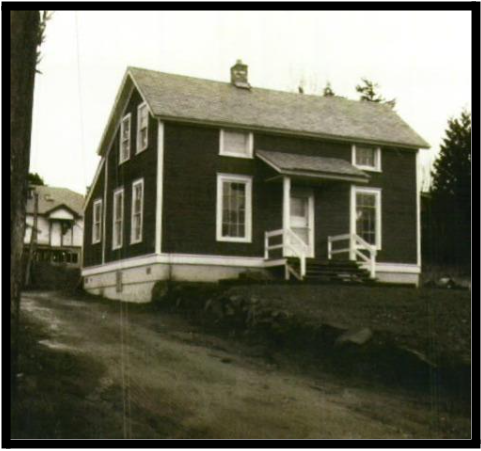
Remodeled-1979
Garden Styles
(1906) - The gardens at 1011 2nd Avenue South and 310 Sunset Avenue North
The Art Nouveau period influenced garden design with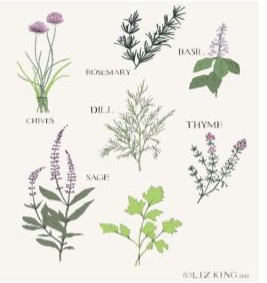 lilies, poppies, lilacs, and irises filling the gardens at that time. According to Sunset Magazine roses, daisies, gladiolas, hollyhocks, foxgloves, and peonies were also among the favorites of home gardeners.
Herb gardens were also popular in home gardens in 1906 for both their medicinal and culinary uses. Herbs like lady's mantle, comfrey, lemon balm, sage and rosemary were commonly grown and used for treating wounds and skin rashes as well as for a variety of aches and pains.
The Ely Garden
320 Sunset Avenue N
See the Garden Walk-Through from Thor's perspective Here
Artist- Krister Eide
Musician- David Little
Scott and Christine Ely not only live in an historic home on Sunset Avenue, they have a history on Sunset Avenue. “My first memory of being in Edmonds was when Scott proposed to me there,” says Christine. So when they moved into their classic 1912 gambrel-roofed house in 2017, it was a little like coming home.
They started with a fresh coat of paint and rehomed the 48 rose bushes that dominated the front yard. Christine has a casual style of gardening that encourages plants to naturalize all over her yard. “I like to wait and watch to see what grows and reproduces itself easily. I plant as many perennials as I can, and then let things propagate.” Starting with a palette dominated by purple and chartreuse, they created a landscape that blooms all year round.
Behind their white picket fence is a wide expanse of lawn, an essential element for family croquet games. Alyssum tumbles between the posts alongside gaura, oriental lilies, verbena, hyssop, and melianthus. A chartreuse smokebush anchors the front deck, decorated with containers filled with cascading annuals.
To the right, hydrangeas from vivid purple to deep rose and hardy fuchsia screen a small private patio. A larger entertaining space is accented with a Gingko tree and Golden Spirit smoke bush, creating an intimate spot for summer entertaining. And in backyard shaded spaces, hostas, ferns, and hellebores share a border softening up the property’s edge.
The Elys are hands-on gardeners, and they do it for a reason. Christine says, ‘I think it's really good for your mental health and physical health. You don't need to go to yoga if you're squatting down in a garden. It’s therapeutic.”
History
Built in 1912 in Queen Anne Style by Harry Van Vleet Allen, born in Michigan in 1878, came to Edmonds in 1906 with his parents, Zachary and Minnie, and brother, Charles. In 1912, he built their family home, a Queen Anne Style on Front Street (Sunset) right next door to his parents. The Allen family remained in this home even after his death in 1948.
Another influential person from Edmonds owned this home: 1971, Edmonds Mayor Harve Harrison lived here. He served 16 years as mayor of Edmonds between 1967 and 1983, the longest consecutive time anyone has held that office. The only Edmonds mayor who occupied the position longer was Fred Fourtner. who was mayor for 17 years total, but was defeated in 1933 after five years in office, only to be re-elected in 1937.
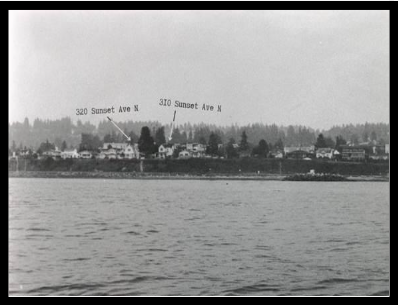
134.86 Sunset Ave & residences, 1976
134.22 non-dated photo of the street from the water; house in question might be visible.
152.27 Aerial photograph of Edmonds waterfront, April 11, 1997
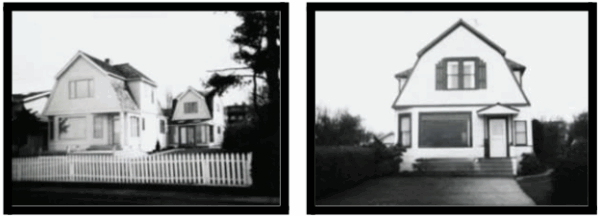
1991
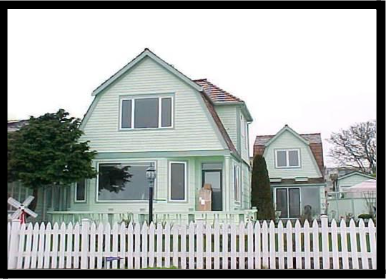
2000
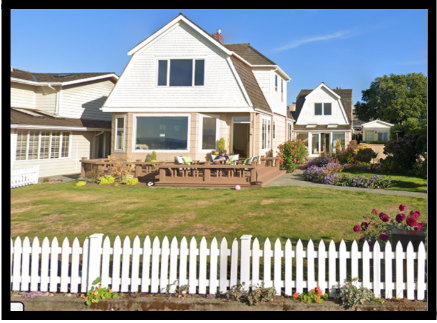
Current
Garden Style
(1912) - The garden at 320 Sunset Avenue North
Although geraniums, phlox and sweet peas were favorites in gardens in 1912, native plants such as broadleaf lupine, camas lily, red flowering current and salal were likely included. Plants like Douglas fir, hemlock, spruce and cedar were used in larger landscapes. Records from the Dunn Gardens in North Seattle (the only surviving Olmsted Brothers-designed landscape open to the public in the city) indicate the use of rhododendrons, lilacs, privet, honeysuckle, viburnum tinus, spirea, and narcissus.
The Pauls Garden
310 Sunset Avenue N
Photo AlbumSee the Garden Walk-Through from Thor's perspective Here
Artist- Cheryl Hufnagel
Musician- David Little
For John and Shirley Pauls, gardening is not only rewarding – it’s a social event.
“We sit on our porch, and people walking their dogs stop and say hello,” John says. Shirley adds, “They love coming by and seeing our flowers, so it's our gift to the street.”
It was by chance they found their Queen Anne free classic house to rent in the 70’s. The Allen House was built by Zachary Allen in 1906 and eventually in 1975, the Pauls purchased it from Allen’s granddaughter, who was born there.
“We started off with NW natives, perennials and nasturtiums for color,” John remembers. “Our neighbors brought over a sword fern, a rhododendron and a clump of Dahlia tubers, and the rest is history.”
Dahlias, perennials and ferns decorate the front yard, with hardy fuchsias and rhododendrons lining the front porch. On the right sits a statuesque cardoon and elephant garlic they share with passers-by.
Down the driveway under an ailanthus tree, you see Shirley’s veggie garden and John’s helleborium. Seated at the back corner is the Allen’s original walnut tree, and a path leading to a cottage, where honeysuckle and perennials attract pollinators.
Their private space includes a fern grotto and shade garden with trilliums, bleeding heart and hostas at the foot of a cherry and pink kousa dogwood. Garden art, stones and petrified wood from their travels peek out alongside peonies and poppies.
John shares, “If I have a secret, it's plant things where they want to be.” Shirley agrees, “Just plant things and enjoy them, if they don't work, try something different. You've got a long time to play with the gardens and see what likes to grow.”
History
Originally owned by Zachary Taylor Allen and his wife, Minnie Allen, this charming residence was constructed in 1906, standing as a testament to the architectural beauty of the time. Minnie Allen, in particular, earned a beloved reputation within the community for her iconic garden, a vibrant and enchanting space that brought joy to all who beheld it. Her green thumb was so widely recognized that it was immortalized in her obituary published in the Edmonds Tribune Review in 1913, which spoke fondly of her horticultural talents. Many of the flowers that filled her garden were gifts from friends and family who understood her passion for cultivating a visually stunning landscape that would enhance the beauty of her home.
The Allen House is an exemplary representation of the Queen Anne Free Classic style, an architectural genre that emerged as a refined descendant of the elaborate Victorian styles popular during the late 19th century. This style is noted for its subtle grandeur, combining intricate design elements with a more streamlined aesthetic. While the back of the house underwent an expansion in 1929, the façade that faces Sunset Avenue has remained largely unchanged since its original construction in 1906. This preservation of its exterior allows the home to retain its historical integrity and charm, captivating onlookers with its enduring beauty.
The Allen family held ownership of the house for many years, passing the property down through generations. The continuity of family presence adds to the home’s historical significance, embedding it deeply within the community’s narrative. John and Shirley Pauls, the current stewards of this remarkable residence, have made it their home for five decades. Initially, the Pauls rented the property for a few years, nurturing a connection to the house that would ultimately lead them to purchase it from the granddaughter of Zachary Taylor Allen himself. Their long-term commitment to maintaining the home and honoring its rich history showcases the deep appreciation for the legacy of the Allen family and the timeless beauty of the home they cherish.
Some info sourced from:
https://etr.stparchive.com/Archive/ETR/ETR08151913P04.php
https://patch.com/washington/edmonds/allen-house
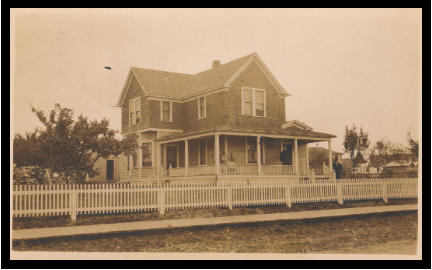
180.566 Postcard photograph of Z.T. Allen residence at 310 Sunset Ave, ca. 1907
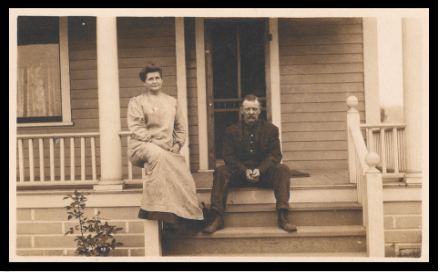
200A-22 Zachary Taylor Allen and Minnie Allen on their front porch at 310 Sunset Ave N., c. 1907
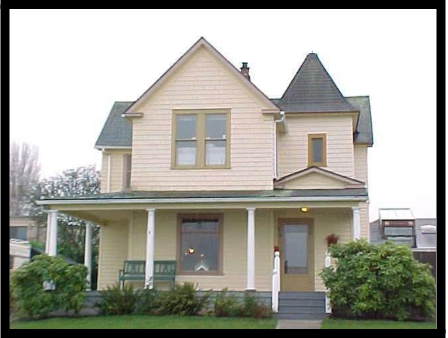
2020
Garden Style
The Art Nouveau period influenced garden design with lilies, poppies, lilacs, and irises filling the gardens at that time. According to Sunset Magazine roses, daisies, gladiolas, hollyhocks, foxgloves, and peonies were also among the favorites of home gardeners.
Herb gardens were also popular in home gardens in 1906 for both their medicinal and culinary uses. Herbs like lady's mantle, comfrey, lemon balm, sage and rosemary were commonly grown and used for treating wounds and skin rashes as well as for a variety of aches and pains.
The Jacoby Garden
555 Main Street
Photo Album
See the Garden Walk-Through from Thor's perspective Here
Artist- Ann Robertson
Musician- Scott Lindenmuth
Each time the Jacobys sink a shovel in the ground, they uncover another mystery about their home. Built in 1907 by timber executive William Bettinger, the Queen Anne style
residence with its wraparound porch was hiding behind an overgrown landscape when Diana and James purchased it ten years ago.
James started by clearing the yard of invasives and taming weeds with cardboard and mulch. His efforts revealed curving concrete edging, old roses and the bones of a garden long gone by. Hundreds of bricks and cobblestones were exposed, and as builder of hardscapes, James has put them to good use. Along with designer Julia Wharton and an epic buying trip to the nursery, he added dozens of plants to create their cottage garden.
Tall Japanese cedars flank the entry, with daphne, lavender, oriental lilies and Japanese anemones growing below. As you pass through to an arbor to a shaded backyard, camellias, magnolia and hydrangeas add color.
There is a new patio for summer entertaining alongside a grape-covered arbor, offering pink grapes for home-made wine. Accenting the property are 3 outbuildings, a gazebo with a cozy woodstove and a shop for James’ projects. Their greenhouse is the ideal spot for growing tomatoes starts they share with passers-by and provides a backdrop to raised vegetable beds. On the east side of the home, curving borders with sun and shade perennials share space with pieris, roses, sedum and conifers.
Happily, the Jacoby’s garden continues to be a garden of discovery. James muses, “When you're down in and amongst the plants and you're working with them, you just notice things about nature that you wouldn't notice from even 6 feet away.”
History
Known affectionately as the Bettinger House, this historic residence was constructed in 1907 by William and Ina Bettinger, marking the beginning of a significant chapter in the architectural history of the area. This charming home is unmistakably characterized by a variety of quintessential Queen Anne details that contribute to its timeless appeal. Among its standout features are the multiple gables that grace its façade, a wraparound porch that invites leisurely afternoons spent outdoors, charming fish-scale shingles that add texture and intrigue, and intricately crafted decorative woodwork that reflects the craftsmanship of the era in which it was built.
The legacy of Ina Bettinger extends beyond just her role as a homeowner; she made a profound impact on the community as the very first teacher at a modest, white wood-planked school building. This small institution eventually paved the way for the establishment of the more expansive Alderwood Manor Grade School, a testament to the growth and development of education in the region. The Alderwood Manor Grade School opened its doors to eager students in 1918, embodying the community's commitment to providing a solid educational foundation. However, as the needs of the growing population evolved, the Alderwood Manor Grade School had to adapt to these changes, and by 1921, it was replaced by a newer and more modern facility, signifying a shift in educational infrastructure and priorities.
The Bettinger House stands as a poignant reminder of the rich historical tapestry of the area, encapsulating the story of its original owners while also serving as a monument to pioneering educators like Ina Bettinger, whose contributions have left an indelible mark on the local community. As preservation efforts continue to celebrate homes like this, the Bettinger House not only offers a glimpse into architectural styles of the early 20th century but also serves as a vessel for the memories and achievements of those who once inhabited its walls.
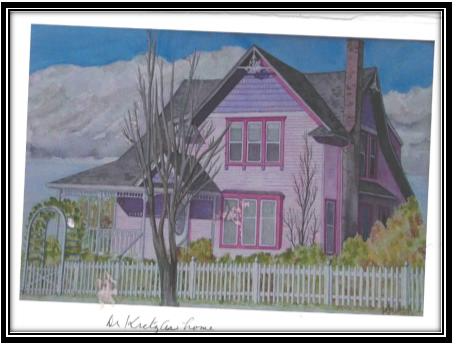
180.235 Painting of the house
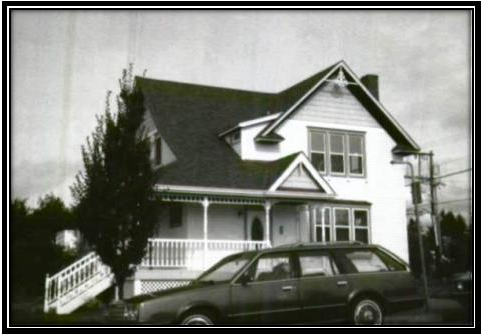
1976
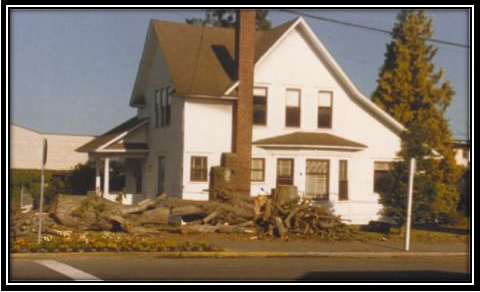
180.70 photo from 1988
Garden Style
(1907) - The garden at 555 Main Street
In 1907 gardens may have been formal with geometrically shaped beds, boxwood hedges, arches and picket fences. Hollyhocks and old roses were often used. Lilacs and viburnum were favorite foundation shrubs because of their fragrance and aesthetic appeal.
The 1907 garden may also have been influenced by the Arts and Crafts movement which tended to be more natural. Gardens of this type were designed with color and texture in mind. There was also a focus on using native plants such as wildflowers, sword ferns, rhododendron, and bleeding heart in the garden. Having a lush green lawn was also a plus.
The Austin Garden
729 Main Street
Mardeen & Darren Austin's Interview
Photo AlbumSee the Garden Walk-Through from Thor's perspective Here
Artist- Jill Owen
Musician- Ashley Webster
High above Main Street with its gracious turret sits Queen Anne-style beauty, The Bassett House. Built in 1888, this historic home’s original owner was suffragette Anna Bassett, Edmond’s first woman to vote and founder of Edmond’s first garden club, Floretum. Living in Edmond’s oldest home, especially one with an established gardening pedigree could be a little daunting, but the Austins take it in stride.
“My mom is a gardener and so were my grandfather and grandmother,” says Mardee, “So I feel like it's in my blood. I feel like it's in my genes.”
Reviving an aging garden takes editing, and in four years the Austins have done a lot. Removing overgrown trees and shrubs came first, followed by fencing, lighting and a fountain. Mardee and Darren like the style of European gardens, a combination of formal and casual.
Stepping up from the street, you follow a cobblestone and brick path past lilacs, hydrangeas and a smoke tree. Passing through an arbor leading to the courtyard, you see peonies transplanted from their last home, elderberry, hardy geraniums, a lacecap hydrangea and rose of Sharon topiaries. Finally the cobblestone path leads to a deck with an expansive view and Mardee’s favorite plant, her Harry Lauder’s Walking Stick.
The property is always changing with new plants and projects like a rockery out front with integrated stairs, but the Austins are mindful of keeping their garden true to their home’s historic roots.
‘I want to stay with the style of the house and the era of the house,” Mardee says, “I think it's kind of a connection to the past and a place to unplug and detach from the craziness of the day.”
History
The Bassett House is a historic residence with a rich narrative that dates back to its construction by the Edmonds Logging Company in 1888. It is the oldest standing house in Edmonds.
In 1914, the house was purchased by Frank H. Bassett and his wife, Anna Bassett, originally Anna Vetter. Frank and Anna’s journey began in 1891 when they met and married in Osaka, Japan, when they were both 31 years old.
Frank Bassett was a dedicated local preacher and missionary during their time in Japan, while Anna showcased her talents as a piano teacher, utilizing one of the home’s rooms as a music studio. Their commitment to education and community service played a pivotal role in the establishment of the Edmonds Public Library. Frank was instrumental in building the library, while Anna took on the crucial task of cataloging the books, ensuring that the community had access to valuable literary resources.
Anna Bassett was a dynamic figure in the community, taking charge of several initiatives that enriched the cultural fabric of the area. She founded the Edmonds Music and Art Study Club and was a prominent leader in the Snohomish County Equal Suffrage Club, advocating for women’s rights and equality. In addition, she established the Floretum Garden Club, which aligned perfectly with her passion for gardening and contributed to the beauty of the local landscape.
The Bassett House stands as a testament to the contributions of Frank and Anna Bassett, reflecting their dedication to education, the arts, and community advocacy. Three generations of the Bassett family owned the house till 1983. Today, it continues to be a cherished landmark, celebrating the legacy of those who shaped Edmonds' history.
Info sourced from: https://myedmondsnews.com/2024/11/in-days-gone-by-the-beginnings-of-the-edmonds-public-library/
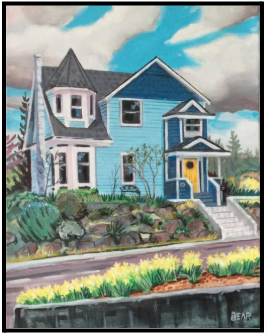
Painting of 729 Main St. by Bear Carpenter
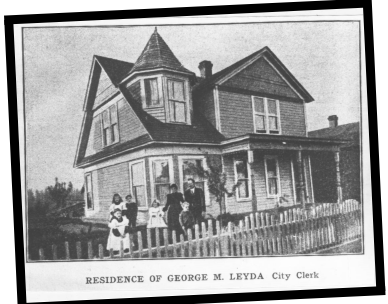
1905 Residence of George M. Leyda - City Clerk
180.81 F.H. Bassett/ George Leyda residence at 729 Main Street, c. 1905
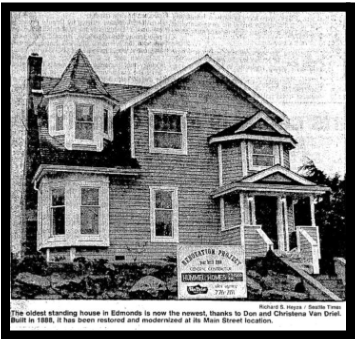
1983 Renovation Project done by the Van Driels.
Garden Style
(1888) - The garden at 729 Main Street
In 1888, the house at 729 Main Street in Edmonds was built by a logging company. When the first owners planned the garden, they may have chosen roses, dahlias, hollyhocks, peonies, and sweet peas which were favorites at that time. In 1900 the house was purchased by F. H. Bassett, and his wife, Anna. In July 1922, Mrs. Bassett and a few other women had an idea to form a rose society in Edmonds. At their first meeting, they were inspired by their guest speaker to not limit themselves to roses .The women agreed that their group would become the Floretum Society, with the mission to encourage the development and cultivation of all flowers and to encourage the preservation and care of our native plants and shrubs. Mrs. Bassett would be very proud of what she started 103 years ago and pleased to know that one of Edmonds Floretum Garden Club's 204 members now resides in her house.
The Bernatek Garden
731 Main Street
Photo AlbumSee the Garden Walk-Through from Thor's perspective Here
Some believe gardens are a gift, Laura Bernatek believes gardens are for giving. From the raised beds in her backyard, she grows over 50 varieties of dahlias and shares bouquets and tubers to support the local food bank.
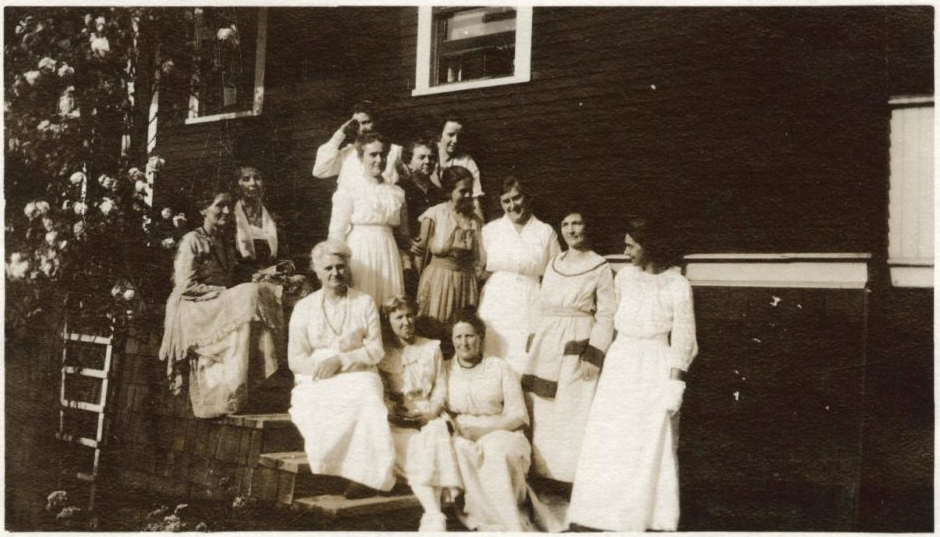
In 2009, Brad and Laura fell in love with their 1910-built Arts and Crafts home and soon became acquainted with one of its early residents, Dorothy Williamson. “She would come by and look at the house and we would talk,” Laura recalled, “Her parents owned Edmonds Hardware a long time ago, and she got married in the living room.”
When the Bernateks purchased the home, the gardenscape was park-like and high-maintenance, so Laura gradually transformed the space into a water-wise, easy-care garden. She rehomed nearly 30 roses, removed overgrown trees, and added pollinator-friendly perennials.
The entry, with a variegated kousa dogwood, features lime santolina, salvias, catmint, and hardy fuchsias. Anchored by Japanese lanterns, boulders (rolled in place from their neighbor’s yard), and a painted garden obelisk with uplifting messages, it’s a welcoming space that invites connection.
As you walk the curving paths around the house, past hardy fuchsia and ferns, you enter the home of Lucy – guard hen and pest control expert. Iris, foxglove, hydrangeas, sword ferns, and dahlia beds create a colorful border in the backyard. To one side is Lucy’s home, shaded by kiwi and accented with rose of Sharon and hydrangea, creating a vintage farm-like atmosphere.
Laura is a hands-on gardener who feels her gardens are a way of reaching out. “Working in the garden is healing for me. I love growing dahlias and sending them out into the world, bringing smiles and happiness to others.”
History
This house was built in 1901 for the saw mill workers and their families. The home, an American Foursquare Colonial, was completed in 1910. Main Street was the main logging road for horses to drag logs down to the saw mills. The land was originally owned by Robert Martindale and was sold to Ira Cobe, who in turn sold it the same day to Samuel Fourtner. Bill and Vinni Crow, the owners of the Edmonds Crow Hardware store, purchased the house from a Lenney Hall in 1931.
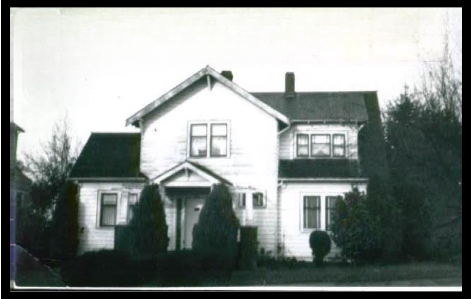
Year unknown
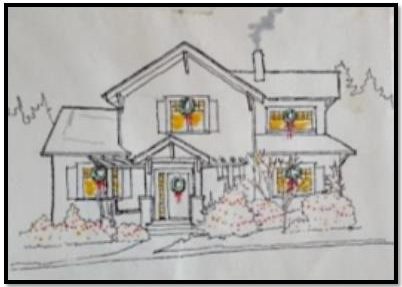
Unknown Artist
The daughter of Bill and Vinni Crow, provided this poem in a book passed on to the Bernatek’s. A lovely thought for all old homes
The House
Who slept here before I came,
Who lived in this room,
How did it look,
Was it the same?
Was there a girl
or two,
a little boy,
A house filled with toys,
with joys,
with dreams…
Or was it just
a lonely place
with empty beds
and silent rooms,
was it filled with gloom,
and did the house long
to be loved.
Was there a girl
who danced and sang,
A dinner bell
that chimed or rang,
And did anyone
ever
stand
right here
as I do now?
Do I know the name,
have I seen the face…
Was this always
the same sweet place,
Was someone glad,
Was someone sad,
Was there a dog,
a cat,
a mouse,
Who has been here,
who knows this house?
Did they know me,
do I know them,
and did they sing a requiem,
I feel them here,
I know their tears,
I loved them too,
The house was new,
was there,
and yet it is the same again,
and was,
and will,
and must always be,
and now
the house belongs to me
Garden Style
(1910) - The garden at 731 Main Street
In 1910 long walkways were common in suburban gardens. If the garden space were large enough, the walkway could be 100 feet or more. Owners often planted hollyhocks, iris, poppies and herbs along stone and brick walks. Fruiting shrubs provided beauty as well as something delicious to eat. Often these pathways were winding which allowed for little surprises as the visitor rounded each bend.
The Needham Garden
820 Main Street
Photo AlbumSee the Garden Walk-Through from Thor's perspective Here
Artist- Janet Hawse
Musicians- Carolyn LaNasa, Marilyn Swanson, Tala Hilis
The Needhams have always lived in vintage homes, and when they saw the1901 Craftsman on Main, they decided it was a great choice. “We like a home that’s unique and has character, says John. “To me it has a soul, and the quirky little things you find in an old home,” adds Cheryl. So in 2022, they moved in and set out to discover their new landscape.
John and Cheryl are hands-on gardeners. One of the first projects John tackled was clearing out a sunny corner of their yard, building a retaining wall creating a vegetable and dahlia garden. Now, as the seasons change, they delight in the surprises that pop up in their borders and add plants to complement existing bloomers.
It’s an explosion of color when you walk up to the house. A picket fence is backdrop to roses, peonies, shasta daisies and perennials blooming from spring to fall. As you step into the yard, a deciduous conifer creates a focal point with gunnera, hellebores, trilliums and hydrangeas enjoying the shade.
Through the fence is a more intimate space with cottage garden-style borders and a patio where they entertain friends and family. Hostas, tiarella, and hydrangeas line the garage-workshop next to a potting area. Touches of whimsy are everywhere, from old signs to a neon sign from a Magnolia restaurant that John restored. A fish sculpture provides home for a chickadee family and buried pots add color in shaded spaces.
As they look forward to seasons of making the gardens their own, Cheryl says of her gardening, ‘I just like the beauty of living things,” and John agrees, “It’s sort of just being in wonder of it all.”
History
Built in 1901, this home is a representative of the early 20th-century American Craftsman movement.
The land was first patented in 1872 by Charles Vickers; it was an investment. He would come to sell the land to those moving to our wonderful city. Such names included: C.L. Lawry, John Darragh, and Thomas H. Knott, who lost the property in tax delinquency all before 1913.
There was still virgin forest in the bowl area, and the old-growth timber was being cut at a feverish pace to feed the shingle mills that lined the waterfront. The home is a reflection of Edmonds early development.
This home became the 23rd property on the Edmonds Register of Historic Places. Properties on the list are associated with the history of Edmonds, retain their original integrity, and are more than 50 years old. A list of these properties is available online from the City of Edmonds website.
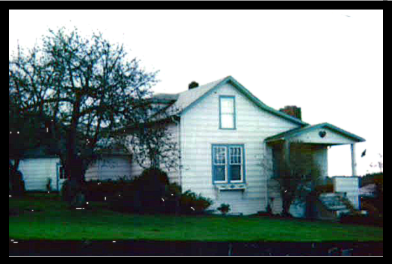
1972
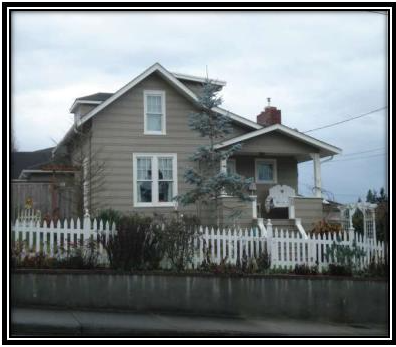
1992
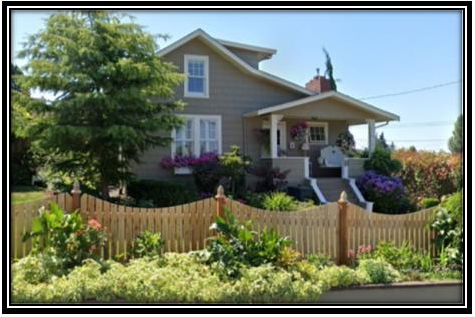
2024
Garden Style
(1918) - The garden at 820 Main Street
The 1918 garden style incorporated "old-fashioned" flowers like lilacs, hollyhocks, mock orange, and snowberry shrubs. Native wildflowers such as common yarrow, common camas, and red columbine were also a significant component of Washington gardens.
The Paust Garden
825 Main Street
Photo AlbumSee the Garden Walk-Through from Thor's perspective Here
Artist- Joyce Donaldson
Musicians- Luis Nenninger, Tania Halladay
Standing on Main, looking at Nathaniel and Kirsten Paust’s house, it’s hard to imagine it split in two. Their 1901 Arts and Crafts Craftsman was originally located near Frances Anderson school, and in the 1930s, it was cut in two and transported to its current home. The Pausts moved in in 2009 and finished a two-story addition in 2021. The renovation revealed new opportunities for their gardens to change as well.
A fan of flowers, Kirsten likes them blooming all year round, and Nathaniel enjoys growing vegetables, fruits, and trees. It’s an ideal partnership that creates a yard that’s colorful and edible.
Tumbling along the street is a border of sun-loving perennials. Ice plants, lithodora, blanketflowers, shasta daisies, and coreopsis create a quilt of color from spring to fall.
As you step up to the yard, bordering the fence are black-eyed susans, phlox and hardy fuchsia accented with a Stewartia and columnar apples. The front porch, where the Pausts spend warm summer evenings, is decorated with climbing roses providing a backdrop for catmint, phlox and echinacea.
To the east is a shade garden with hydrangea, astilbe, and hardy fuchsia – punctuated by blueberry bushes. And as you head west through the arbor, you pass lilacs and hydrangea onto a green lawn and hedging that complements the cherry trees, crabapples, and a new pear tree.
It’s a subtle negotiation for sunny spots, with Nathaniel wanting to grow more edible plants and Kirsten wanting dahlias, but they always seem to strike a graceful balance. And when it comes to planting new spaces, Kirsten advises, “Be patient. Plants do get bigger than you originally buy them, and yeah, that's part of the fun.”
History
The Profitt/Astell House is a distinguished example of a two-story Craftsman bungalow, constructed in 1901. This historic residence is notable for its association with two prominent figures in the local community: George Profitt and James Astell. Profitt, a significant contributor to the town’s infrastructure, served as the water superintendent and was the plumbing proprietor of Reliable Flooring. Meanwhile, James Astell, the son of Carrie Yost Astell, played a vital role in local governance, serving multiple terms as a city councilman and holding the esteemed position of Fire Chief.
Originally, the house was situated on a knoll, located at the site of the original grade school on Main Street, approximately two blocks west of its current location. In 1928, during a pivotal period of growth in the community, George Profitt purchased the home and oversaw its relocation to its present site. This move occurred around the time of the construction of Edmonds Elementary School, which is now the location of the Francis Anderson Center.
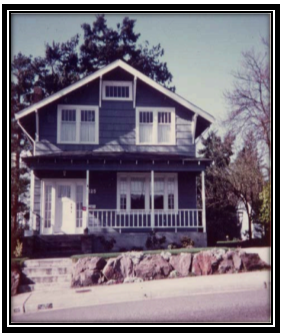
Profitt-Astell-House-mid-1970s
Garden Style
(1901) - The garden at 825 Main Street
The house at 825 Main Street was built in 1901 at the end of the Victorian era. Although the geranium was the most favored flower at that time, other popular flowers were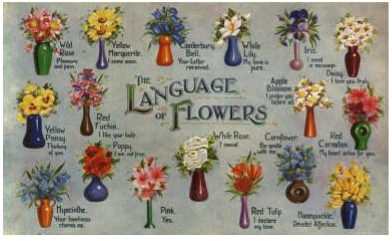 phlox, petunia, morning glory and roses. Victorians often used flowers to convey secret messages, with each bloom having a specific meaning. The art of interpreting floral arrangements, known as “floriography,” allowed individuals to communicate their feelings and intentions without uttering a single word. Decoding flower arrangements became an intricate language of its own, requiring careful observation and understanding. . . Every petal, color, and arrangement held significance: a red rose symbolized passionate love, while a yellow chrysanthemum conveyed rejection or disdain. Arrangements of flowers also mattered; if one blossom leaned to the left, it meant “no,” whereas leaning to the right meant "yes." (FloraQueen.com)